Photography can be an incredibly rewarding hobby, creative outlet, or even a professional pursuit, but getting started can sometimes feel expensive. With cameras, lenses, tripods, lighting equipment, bags, memory cards, and countless accessories available, it is easy to assume that you need to spend a small fortune before you can take great photos.
Fortunately, that is not the case.
Building a capable photography kit is less about buying everything at once and more about choosing the right equipment for the type of photography you want to create. With a little planning, you can put together a practical setup that delivers excellent results without stretching your budget.
Whether you are interested in travel photography, portraits, landscapes, content creation, or simply capturing everyday moments, here are some ways to build a photography kit without breaking the bank.
Start With Your Photography Goals
Before buying equipment, think about what you actually want to photograph.
A person interested in landscapes may need different equipment than someone who wants to create portraits or product photos. A travel photographer may prioritize lightweight gear, while a content creator might place more importance on lighting, tripods, and accessories.
Ask yourself a few simple questions.
What subjects do you plan to photograph most often? Will you primarily shoot indoors or outdoors? Do you need equipment that is easy to carry? Are you planning to create photos, videos, or both?
Knowing your goals can prevent you from purchasing equipment that looks impressive but rarely gets used.
Instead of trying to build the biggest photography kit possible, focus on building one that supports the way you actually shoot.
Choose a Camera That Fits Your Needs
Your camera will usually be the biggest investment in your photography kit, but that does not mean you need the newest or most expensive model available.
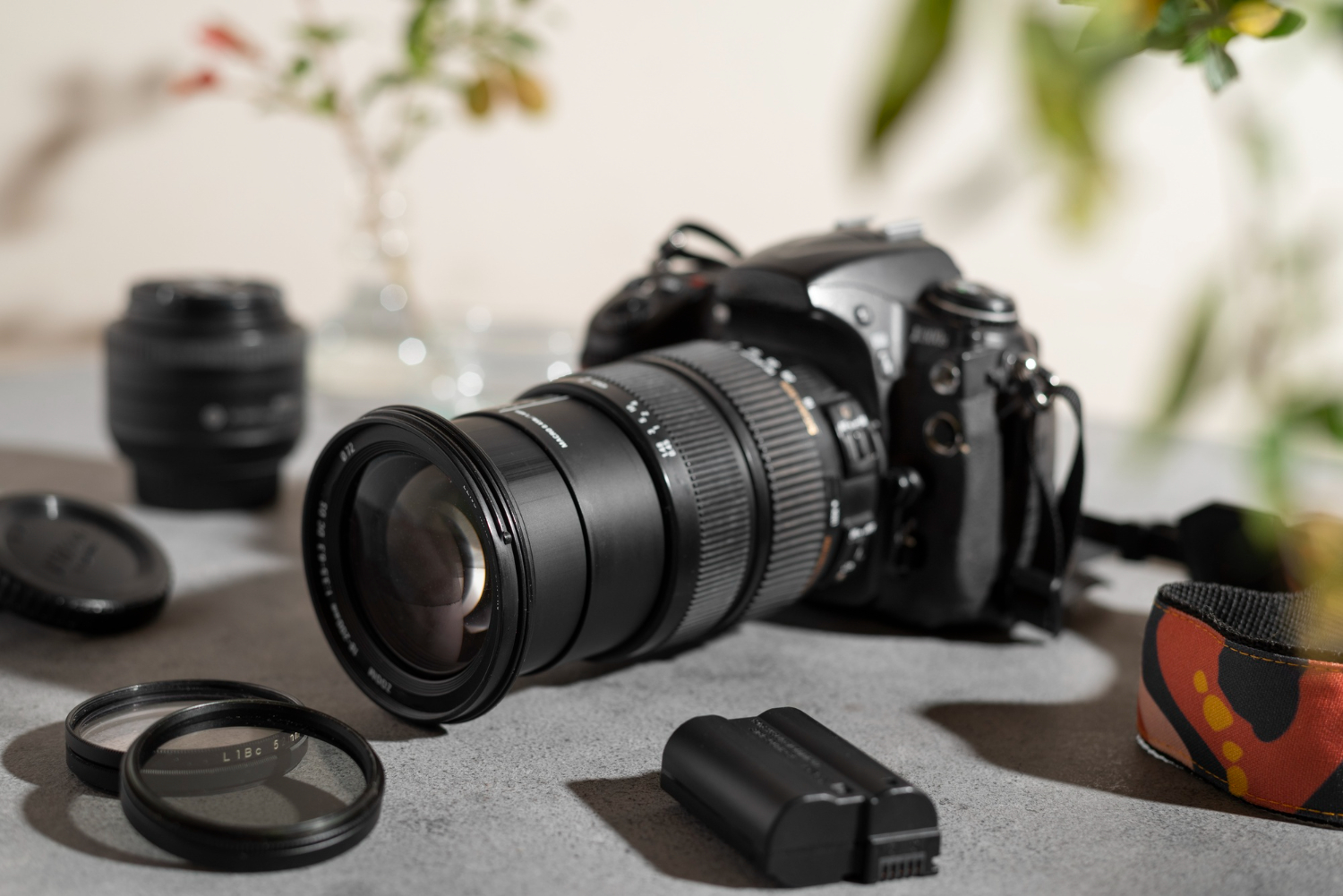
Modern entry-level cameras can provide excellent image quality and enough features for beginners to develop their skills. Mirrorless cameras and DSLRs both offer interchangeable lenses, manual controls, and strong image quality.
When comparing cameras, look at practical features such as ease of use, autofocus performance, battery life, available lenses, video capability, and overall size.
You may also want to consider buying a slightly older camera model. Camera companies frequently release new versions, but previous generations often remain highly capable. Choosing an older model can sometimes save money while still providing the features you need.
The most important thing is selecting a camera that feels comfortable and encourages you to keep practicing.
Begin With One Versatile Lens
Lenses can quickly become one of the most expensive parts of photography, so there is no need to purchase several lenses immediately.
Start with one versatile lens.
Many cameras come with a standard kit lens that covers a useful range of focal lengths. These lenses are often lightweight and flexible enough for landscapes, travel photography, family photos, and everyday shooting.
As your photography skills develop, you will begin to understand what your current lens cannot do.
For example, you may eventually want a wider lens for landscapes, a telephoto lens for wildlife, or a lens with a wider aperture for portraits and low-light photography.
Waiting until you understand your needs makes it much easier to choose your next lens wisely. Invest in Memory Cards
Memory cards are small accessories, but they are essential parts of your photography setup.
Choose memory cards that are compatible with your camera and provide enough storage for your typical shooting sessions.
You do not necessarily need the largest capacity available. In fact, some photographers prefer using several smaller memory cards instead of putting an entire trip or event on one card.
Keeping an extra memory card in your camera bag is also a good habit. Running out of storage during an important moment can be frustrating, especially when a spare card could easily solve the problem.
Add a Spare Battery
Photography can drain camera batteries surprisingly quickly, especially when you are using autofocus, reviewing images frequently, recording video, or shooting for long periods.
A spare battery is one of the most useful accessories you can add to your kit.
This becomes especially important when traveling or photographing events where you may not have easy access to a power outlet.
Keeping a charged backup battery in your bag gives you more flexibility and reduces the chance of missing a photo because your camera has run out of power.
Choose an Affordable Tripod
A tripod can dramatically expand what you can do with your camera.
Tripods are useful for long exposures, night photography, landscapes, self-portraits, product photography, group photos, and video recording.
Beginners do not necessarily need an expensive professional tripod. Look for one that is stable enough for your camera while still being easy to carry.
If you plan to travel frequently, consider a compact tripod that folds down into a smaller size.
A good tripod can remain useful for years, making it one of the better accessories to add to a budget-friendly photography kit.
Protect Your Equipment With a Camera Bag
Photography equipment can become expensive to replace, so protecting it should be a priority.
A camera bag does not need to be large or complicated. You simply need enough space for your camera, lens, batteries, memory cards, charger, and a few accessories.
Look for padded compartments that help keep your equipment separated and protected. If you frequently photograph outdoors, weather resistance may also be helpful.
Choosing the right bag can also keep your setup organized. Instead of searching through multiple pockets or bags, you can keep your essential gear together and ready whenever inspiration strikes.
Use Affordable Lighting Solutions
Lighting can make an enormous difference in photography, especially for portraits, product images, and indoor content.
Fortunately, good lighting does not always require expensive equipment.
Natural window light can be one of the best free lighting sources available. Positioning your subject near a large window can create soft, flattering illumination.
Simple reflectors can also help bounce light onto your subject and reduce harsh shadows.
If you need artificial lighting, start small. Affordable LED lights, compact photography lights, or basic light kits can help you experiment with different lighting styles without making a major investment.
Learning how to control light is often more valuable than buying the most expensive lighting equipment.
Don’t Forget a Cleaning Kit
Cameras and lenses naturally collect dust, fingerprints, and debris.
A basic cleaning kit is inexpensive and can help protect your equipment while keeping your images clear.
Useful cleaning accessories may include a microfiber cloth, lens cleaning solution, air blower, and soft brush.
Avoid using household cleaners or rough fabrics on camera lenses. Photography equipment has delicate coatings that can be damaged by improper cleaning.
Taking a few minutes to care for your equipment can help extend its lifespan. Consider Buying Used Gear
Used photography equipment can be an excellent option when building a kit on a budget.
Cameras and lenses are often sold because the previous owner has upgraded rather than because there is something wrong with the equipment.
Buying used can make higher-quality gear much more affordable.
However, always purchase from a trustworthy seller and carefully inspect equipment whenever possible.
For cameras, check the buttons, screen, sensor, battery compartment, and general condition. For lenses, inspect the glass, autofocus, zoom ring, and lens mount.
A carefully selected used item can sometimes provide excellent value.
Avoid Buying Every Accessory at Once
One of the biggest mistakes beginners make is purchasing too many accessories before they understand how they will use them.
Camera stores are filled with filters, flashes, remotes, grips, stabilizers, adapters, lighting tools, and dozens of other products.
Many of these accessories can be useful, but that does not mean you need all of them. Start with the essentials and add equipment gradually.
Every time you consider purchasing something new, ask yourself what problem it solves.
If you frequently notice the same limitation while shooting, then purchasing an accessory that addresses that problem may make sense.
This approach keeps your kit affordable while ensuring that every piece of equipment has a purpose.
Improve Your Skills Before Upgrading Your Gear
Better equipment can provide additional features, but it cannot replace photography skills.
Learning composition, lighting, exposure, focus, shutter speed, aperture, and ISO can improve your photos far more than constantly upgrading equipment.
Spend time practicing with the gear you already own.
Experiment with different angles, lighting conditions, camera settings, and subjects. Review your images and identify what you like and what you want to improve.
You may discover that your current equipment is capable of much more than you originally thought.
Build Your Photography Kit Over Time
A photography kit does not need to be completed in one shopping trip.
Start with a camera, versatile lens, memory card, spare battery, and protective bag. From there, you can gradually add a tripod, lighting equipment, additional lenses, cleaning supplies, and other accessories based on your needs.
Building slowly has another advantage: you learn what equipment is actually useful to you.
Over time, your photography kit becomes personalized around your shooting style instead of simply becoming a collection of gadgets.
Final Thoughts
Building a photography kit on a budget is completely possible when you focus on practical equipment and thoughtful purchasing decisions.
You do not need the most expensive camera, a bag full of lenses, or professional studio equipment to start creating great images. A simple setup paired with creativity, practice, and an understanding of photography fundamentals can take you surprisingly far.
Begin with the essentials, use the equipment you already have, and upgrade only when you identify a genuine need.
Photography is ultimately about capturing moments, telling stories, and expressing your creativity. The best photography kit is not necessarily the most expensive one. It is the kit that helps you get outside, experiment, learn, and keep taking photos.